Whispers of a Forgotten Kingdom: Hidden Culture Spots in Hue You’ve Never Heard Of
Have you ever wandered a city and felt like you were the only one noticing its quiet magic? In Hue, Vietnam, beyond the well-trodden Imperial City, there’s a softer, deeper pulse—ancient pagodas tucked in alleyways, family-run craft workshops humming with tradition, and riverside shrines where incense still tells stories. I was stunned by how few travelers venture into these authentic cultural spaces. This is not just a city of emperors—it’s a living museum, quietly preserving soul.
Beyond the Imperial Walls: Discovering Hue’s Undiscovered Cultural Heart
Hue is most often recognized for its grand Citadel, a sprawling fortress complex that once housed Vietnam’s Nguyen emperors and now stands as a UNESCO World Heritage Site. Yet, for all its historical significance, the Citadel represents only one chapter of a much richer narrative. The true cultural heart of Hue beats in the quieter corners—places where tradition isn’t performed for cameras but lived with quiet consistency. These hidden spots are not hidden by design, but by the simple fact that most visitors follow the same well-marked paths, missing the subtle rhythms of daily spiritual and artisanal life that define the city’s deeper identity.
For over 140 years, Hue served as the imperial capital of Vietnam, a center of political power, Confucian scholarship, and Buddhist devotion. But beyond the court ceremonies and royal architecture, the city nurtured a culture rooted in mindfulness, craftsmanship, and ancestral reverence. While the Citadel draws crowds with its imposing gates and restored halls, the surrounding neighborhoods preserve traditions passed down through generations—practices that have survived war, modernization, and waves of tourism. Exploring these lesser-known sites is not about rejecting the mainstream, but about expanding one’s understanding of what culture truly means: not spectacle, but continuity.
What makes these hidden cultural spaces so valuable is their authenticity. Unlike staged performances or reconstructed temples, they remain active parts of local life. A pagoda where monks still chant at dawn, a riverside shrine tended by a single family, or a workshop where conical hats are shaped by hand—these are not relics, but living expressions of heritage. By visiting them with awareness and respect, travelers gain access to a Hue that is not curated for outsiders but sustained by those who call it home. The shift from tourist to respectful observer allows for a more meaningful connection, one that honors the people and practices that keep this culture alive.
The Quiet Strength of Tu Hieu Pagoda: A Monk’s Morning Chant
Just a short distance from the bustling city center, nestled along the banks of the Perfume River, lies Tu Hieu Pagoda—a serene Buddhist monastery that operates far from the tourist gaze. Unlike the more famous Thien Mu Pagoda, Tu Hieu does not feature prominently on travel brochures, yet it offers one of the most profound spiritual experiences in Hue. Here, daily life unfolds in harmony with centuries-old monastic rhythms. At dawn, the air fills with the low, resonant sound of chanting as monks gather in the main hall, their voices rising like mist over the lotus ponds that dot the temple grounds.
The pagoda’s layout reflects traditional Vietnamese Buddhist architecture, with tiled roofs, wooden pillars, and open courtyards covered in moss and shadow. Incense coils slowly in small shrines, and the scent of sandalwood lingers in the morning air. Visitors who arrive early—before 6 a.m.—are rewarded with a rare intimacy: the chance to witness a living spiritual practice without the distraction of crowds. The chanting, known as kinh, is not a performance but a form of meditation and devotion, a daily offering of mindfulness and compassion. For those who pause to listen, the experience can be deeply moving, even transformative.
Respectful behavior is essential when visiting Tu Hieu. Travelers should dress modestly, covering shoulders and knees, and speak in hushed tones. Photography is permitted but should be done discreetly, avoiding shots of monks during prayer. The goal is not to capture an image, but to absorb the atmosphere—to become part of the stillness rather than a disruption to it. By observing quietly, visitors honor the sanctity of the space and support its preservation. Tu Hieu is not a destination to check off a list; it is a place to slow down, breathe deeply, and remember that some of the world’s most powerful moments are the quietest ones.
Dong Ba Market’s Craft Corners: Where Tradition is Handmade
Dong Ba Market is Hue’s largest and most vibrant marketplace, known to most visitors for its food stalls, fresh produce, and tourist souvenirs. Yet, within its labyrinth of alleys and wooden booths, there are pockets of quiet craftsmanship that tell a different story—one of heritage, patience, and skill passed from hand to hand. These micro-workshops, often no larger than a closet, are where artisans continue traditions that have shaped Hue’s identity for generations. Here, conical hats are woven from palm leaves, silk is embroidered with delicate floral patterns, and incense sticks are hand-rolled in preparation for ancestral rituals.
One of the most enduring crafts is the making of the non la, the iconic Vietnamese conical hat. At a small stall tucked behind the main fish section, an elderly woman works silently, her fingers moving with practiced ease as she weaves thin strips of palm leaf around a bamboo frame. She learned the craft from her mother, who learned it from hers, and now her granddaughter watches closely, waiting for her turn to try. These hats are not just souvenirs; they are functional objects, worn by farmers, mothers, and elders across Vietnam. Each hat takes several days to complete, requiring precision and patience. Visitors are often welcome to observe, and some artisans offer short demonstrations, allowing guests to try weaving a few strips under gentle guidance.
Another hidden gem within the market is a family-run silk embroidery stall, where women sit on low stools, threading needles with colored silk to create intricate designs on fine fabric. The patterns often depict lotuses, dragons, or scenes from royal court life—symbols deeply rooted in Vietnamese culture. The embroidery is used for traditional clothing, altar cloths, and ceremonial banners. While some pieces are sold to tourists, many are made for personal or religious use, underscoring the spiritual significance of the craft. By supporting these artisans—through purchases or simply through attentive observation—travelers contribute to the survival of traditions that might otherwise fade in the face of mass production.
The Poetry of Thien Mu Pagoda at Sunset
Thien Mu Pagoda is one of Hue’s most photographed landmarks, its seven-tiered tower rising gracefully above the Perfume River. Most visitors arrive in the mid-morning, when tour groups descend from buses and photographers jostle for the perfect angle. But to experience Thien Mu in its full emotional depth, one must return at sunset, when the golden light softens the edges of the tower and the river reflects the sky like a mirror. The crowds have thinned, the air has cooled, and a sense of peace settles over the grounds. This is when the pagoda reveals its true nature—not as a monument, but as a place of contemplation.
As the sun dips below the western bank, local residents begin to arrive—elders walking with canes, couples strolling hand in hand, monks in saffron robes pausing to gaze at the water. Some light incense at the small shrines near the riverbank, offering quiet prayers for health, peace, or remembrance. The sound of the wind through the banyan trees blends with the distant chime of the temple bell, creating a natural symphony. It is in these moments that Thien Mu feels most alive, not as a relic of the past, but as a living part of the community’s spiritual rhythm.
The pagoda’s history adds to its resonance. Built in 1601, Thien Mu has witnessed centuries of change—dynastic shifts, colonial rule, war, and renewal. It stands as a symbol of resilience, having been damaged and rebuilt multiple times, yet always returning to its place on the riverbank. Its name, meaning “Celestial Lady,” comes from a local legend of a divine woman who prophesied the pagoda’s construction. For many Vietnamese, Thien Mu is not just a religious site but a national icon, representing the enduring spirit of the people. By visiting at sunset, travelers align themselves with this deeper current, experiencing the site not as a checklist item, but as a moment of connection—with history, with nature, and with the quiet pulse of Hue itself.
Hidden Altars and Family Shrines Along the Perfume River
Scattered along the quieter stretches of the Perfume River, away from the main tourist routes, are small, unmarked shrines and family altars that speak volumes about Vietnamese cultural values. These modest structures—some no more than a stone platform with a few offerings, others enclosed in simple wooden cabinets—are maintained by families as acts of devotion to ancestors. Unlike the grand temples and pagodas, these shrines are not built for public worship, but for private remembrance. They reflect a belief deeply woven into Vietnamese life: that the past is not gone, but present in memory, ritual, and daily respect.
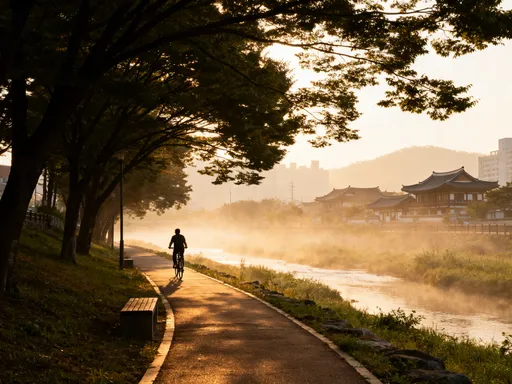
Visitors may stumble upon these shrines while walking or cycling along the riverpath, often tucked beneath trees or near old stone steps leading down to the water. Some are adorned with fresh flowers, joss sticks, or small bowls of fruit. Others bear faded photographs of loved ones, their edges curled from sun and rain. These offerings are not symbolic gestures, but living practices—daily or weekly acts of care that reinforce family bonds across generations. In Vietnamese culture, honoring ancestors is not a religious obligation alone, but a moral duty, a way of expressing gratitude and maintaining harmony between the living and the departed.
For travelers, encountering these shrines can be a powerful reminder of the personal dimension of culture. While museums and monuments tell the stories of nations, these quiet altars tell the stories of individuals—the farmer who once worked the nearby fields, the grandmother who raised five children, the soldier who never came home. Observing them requires a different kind of attention: not curiosity, but reverence. Visitors should refrain from touching offerings, taking close-up photos, or speaking loudly. A quiet moment of stillness, a slight bow, or simply moving on with care is often the most respectful response. In doing so, one participates in the unspoken etiquette of cultural humility—acknowledging that some spaces are not meant for intrusion, but for quiet witness.
The Art of Hue Royal Music (Nhã Nhạc): A Living Performance in Modest Halls
In 2003, UNESCO recognized Nhã Nhạc, or Hue Royal Court Music, as a Masterpiece of the Oral and Intangible Heritage of Humanity—a testament to its historical and artistic significance. Yet, unlike many cultural performances that have been commercialized for tourists, Nhã Nhạc is still performed in intimate, community-centered settings where tradition takes precedence over spectacle. These performances do not take place in grand concert halls, but in modest cultural centers, pagodas, or neighborhood gathering spaces, often attended more by locals than by visitors. The music, with its delicate instrumentation and meditative pacing, is not designed for entertainment, but for ritual, reflection, and continuity.
Nhã Nhạc originated in the royal court of the Nguyen dynasty, where it was performed during ceremonies, coronations, and ancestral rites. The ensemble typically includes traditional instruments such as the dan nguyet (two-stringed lute), dan nhi (fiddle), flute, and small percussion like clappers and bells. The melodies are slow, deliberate, and highly structured, reflecting the Confucian values of order, harmony, and restraint. Each piece follows strict musical forms, and the musicians—often trained from childhood—must master not only the notes but the proper posture, breathing, and expression required to honor the music’s spiritual depth.
For travelers seeking an authentic experience, the best way to encounter Nhã Nhạc is through local cultural centers or community events. Some performances are held at the Hue Traditional Music Center, while others take place during festivals or temple anniversaries. Tickets are modest, and audiences are expected to remain quiet and attentive. Unlike Western concerts, there is no applause between pieces; respect is shown through stillness and presence. By attending such a performance, visitors do more than hear music—they become part of a living tradition, one that has survived centuries of change because of the quiet dedication of those who keep it alive.
How to Explore Hue’s Hidden Culture Responsibly
Discovering Hue’s lesser-known cultural spaces is a privilege, but it comes with responsibility. These sites are not theme parks or staged attractions; they are active parts of community life, fragile in their authenticity. Thoughtless behavior—loud talking, intrusive photography, inappropriate dress—can disrupt the very qualities that make them special. To explore Hue’s hidden culture with integrity, travelers must adopt a mindset of mindfulness, humility, and respect. This begins with preparation: learning basic cultural norms, dressing appropriately, and choosing the right time to visit.
One of the most effective ways to engage with these spaces is by hiring a local guide. A knowledgeable guide not only provides context and history but also helps navigate social etiquette, ensuring that visits are welcomed rather than tolerated. Guides from community-based tourism initiatives are especially valuable, as they often come from the neighborhoods being visited and reinvest their income locally. Visiting during off-peak hours—early morning or late afternoon—also reduces impact and increases the chances of meaningful encounters. At Tu Hieu Pagoda, for example, arriving at dawn allows for a peaceful experience without disturbing the monks’ routine.
Dress matters deeply in Vietnamese culture, particularly in religious and family spaces. Shoulders and knees should be covered, and footwear removed when entering homes, pagodas, or shrines. Carrying a light shawl or scarf can be both practical and respectful. Equally important is the attitude with which one approaches these places. Rather than seeking the perfect photo, travelers should aim to be present—to listen, observe, and absorb. When interacting with artisans or monks, a simple smile, a quiet thank you, or a small purchase of handmade goods can mean more than any grand gesture.
Supporting small cultural enterprises—whether a family-run workshop, a local music performance, or a community-run homestay—ensures that tourism benefits those who preserve the culture. Every responsible choice, no matter how small, contributes to the sustainability of Hue’s cultural ecosystem. By traveling with care, visitors do not merely witness history—they help ensure that it continues.
Conclusion
Hue’s soul isn’t just in its palaces or postcards—it lives in quiet corners, whispered chants, and hands shaping centuries-old crafts. By stepping off the beaten path, travelers don’t just see culture—they participate in its continuation. The real journey isn’t about checking sights off a list; it’s about listening closely, moving gently, and letting a place reveal itself, one hidden moment at a time. In a world where authenticity is increasingly rare, Hue offers a rare gift: the chance to connect with a culture that is not performed, but lived. And in that connection, we find not only the heart of a city, but a deeper understanding of what it means to honor the past, respect the present, and preserve what matters for the future.