Taste the Light: How Adelaide’s Food Culture Became My Lens for Life
You know that feeling when a city just gets you? Adelaide hit me like a flavour bomb—markets humming, golden light on stone buildings, and dishes that told stories. I went for the food, stayed for the photos, and left seeing the world differently. Turns out, snapping meals isn’t just about Instagram—it’s about connection, culture, and catching the soul of a place in a single frame. What began as a simple travel journal evolved into a visual meditation on presence, community, and the quiet beauty of everyday rituals. In Adelaide, I discovered that food is more than sustenance; it’s a language, and photography became my way of learning to speak it.
First Impressions: A City That Feels Like Home
From the moment I stepped off the train at Adelaide Railway Station, there was a sense of calm that settled over me—a rarity in modern travel. The city exhaled softly, lined with jacaranda trees and sandstone buildings that glowed under the late afternoon sun. Unlike the relentless pace of Sydney or the curated chaos of Melbourne, Adelaide moved with intention, not urgency. There were no towering skyscrapers demanding attention, no crowds rushing to destinations unseen. Instead, life unfolded in leafy suburbs, corner cafés, and open-air markets where time seemed to stretch.
My first instinct wasn’t to visit a museum or climb a lookout. It was to find coffee. Not just any coffee—a real one, brewed with care and served with a smile. I wandered into a small café in Norwood, drawn by the scent of roasted beans and the low murmur of conversation. The space was unpretentious: raw timber tables, hanging plants, and a chalkboard menu written in looping script. I ordered a flat white and a turmeric-spiced scrambled tofu bowl—vibrant yellow against a dark ceramic plate, garnished with microgreens and a drizzle of tahini.
Without thinking, I reached for my camera. The light streaming through the east-facing window caught the steam rising from the dish, softening the edges of the frame. That first photograph wasn’t staged or filtered. It was instinctive—a reflection of how I was feeling: grounded, curious, present. The barista noticed and smiled. “You’re capturing the mood, not just the meal,” she said. And in that moment, I realized I wasn’t just documenting food—I was beginning to understand a way of life.
The Heartbeat of Adelaide: Central Market Awakens the Senses
No experience in Adelaide is complete without a visit to the Central Market, a bustling hub of culture and cuisine that has thrived since 1869. Nestled in the heart of the city, this covered market is not a tourist afterthought—it’s a living, breathing part of daily life. Locals come here to shop, to chat, to taste, and to celebrate the seasons through food. With over 150 stalls, the market offers a sensory journey unlike any other: the tang of aged feta, the earthy aroma of truffle oil, the sweet perfume of ripe mangoes piled high in wooden crates.
As a photographer, I found myself overwhelmed—in the best way. Every few steps offered a new composition: a vendor’s weathered hands shaping fresh pasta, steam curling from a dumpling basket, jars of honey catching the light like liquid gold. I moved slowly, allowing the rhythm of the market to guide me. I photographed a pyramid of heirloom tomatoes—red, yellow, purple—stacked with care beside a handwritten sign: ‘Grown by the Costa family, Two Wells.’
Many of the vendors are third-generation artisans, their stalls passed down like heirlooms. At a Greek deli, I met Maria, who shared stories of her grandmother selling olives from a wooden cart in the 1950s. “We don’t just sell food,” she said, slicing me a piece of spanakopita. “We sell memory.” I took the photo first—the golden pastry flaking under the light—then tasted. The spinach and feta filling was rich, savoury, layered with dill and lemon. One bite told a story of migration, resilience, and love.
Photographing here wasn’t about perfection. It was about honesty. I didn’t wait for ideal lighting or perfect angles. I captured laughter, concentration, the quiet pride in a craftsman’s eyes. The Central Market taught me that food is not just consumed—it’s lived, shared, and remembered.
Street Food & Hidden Corners: Chasing Authentic Flavours Off the Beaten Path
While the Central Market is Adelaide’s culinary crown jewel, its laneways and suburban strips hold the city’s hidden treasures. These are the places where culture thrives in quiet corners, where family-run kitchens serve generations-old recipes without fanfare. One evening, I followed the scent of lemongrass and chilli down Peel Street in the city’s northwest. As dusk settled, woks flared to life in small restaurants, their flames licking the edges of steel pans. The air thickened with the scent of garlic, fish sauce, and charred pork.
I crouched low to photograph a plate of Hainanese chicken, its silky skin glistening under a warm pendant light. Steam blurred the lens slightly, but I left it—there was beauty in the imperfection. The chef, noticing my focus, nodded and lifted the lid of a bamboo steamer. “Fresh bao,” he said, offering one. The steamed bun was pillowy soft, filled with braised pork belly and pickled vegetables. I snapped another photo, this time of the chef’s hands—tattooed, scarred, skilled. This was not a performance. It was a life.
Another day, in a quiet lane in Norwood, I stumbled upon a tiny Portuguese tuckshop tucked between a laundromat and a book exchange. The sign above the door read ‘Lisboa Patisserie’ in peeling blue paint. Inside, the space was dimly lit, with a single bulb illuminating a glass case of custard tarts. The owner, an elderly man named José, laughed as I raised my camera. “They’re not for show,” he said, “but go ahead.”
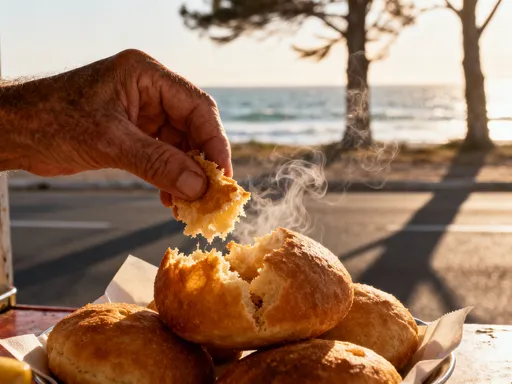
I photographed the tarts—their caramelised peaks cracked like desert salt, the custard beneath pale gold. He handed me one still warm. The crust shattered delicately, the filling smooth and rich with vanilla and lemon. “My mother’s recipe,” he said. “Fifty years in Adelaide, and I still make them the same way.” In that moment, I wasn’t a tourist. I was a guest, welcomed into a small but meaningful part of someone’s world.
Wine, Light, and Long Lunches: The Barossa Valley Day Trip
A short drive from Adelaide’s city centre lies the Barossa Valley, one of Australia’s most celebrated wine regions. Known for its bold shiraz and historic vineyards, the valley is also a haven for food lovers. Rolling hills draped in vines glow amber in the late afternoon, and the pace of life slows to match the rhythm of the seasons. I joined a guided tour that combined wine tastings with visits to local producers—dairies, orchards, and artisanal bakeries.
At a rustic cellar door in Tanunda, I sat on a stone terrace overlooking a sea of vines. The winemaker, a woman named Eliza, poured a glass of estate-grown shiraz and paired it with a charcuterie board that looked like a still-life painting: figs split open like flowers, cured meats folded with care, local goat cheese dusted with ash and thyme. The late sun bathed the scene in golden light, casting long shadows across the wooden platter.
I spent nearly ten minutes framing the shot—adjusting my angle, waiting for a cloud to pass, capturing the way the light caught the rind of a Cambozola wheel. But Eliza reminded me, “Don’t forget to taste it while it’s at its best.” She was right. Photography, like wine, is best enjoyed in the moment. I put the camera down, took a bite, and let the flavours unfold—earthy, bright, complex.
Later, as we toured the vineyard, Eliza explained how the soil, elevation, and microclimate shaped each vintage. “We don’t make wine to impress,” she said. “We make it to reflect this place.” That philosophy resonated deeply. My photographs weren’t just records of food and wine—they were reflections of terroir, of time, of people who cared deeply about what they created. In the Barossa, I learned that the best meals are not rushed. They are savoured, shared, and remembered.
Café Culture: Where Design Meets Daily Ritual
Adelaide’s café culture is not just about coffee—it’s about ritual, design, and the art of daily living. Across suburbs like Unley, Stirling, and Prospect, independent cafés have turned the morning routine into a quiet celebration of craft. These are spaces where every detail matters: the weight of the ceramic mug, the grain of the timber bench, the precision of the espresso pour.
I visited a specialty coffee roastery in Unley, where the beans are roasted in-house and the menu changes with the seasons. The owner, a former engineer named Daniel, spoke about coffee with the passion of a scientist and the soul of a poet. “It’s not just about caffeine,” he said. “It’s about connection—to the grower, to the process, to the person drinking it.”
I photographed the ritual: the slow grind of the beans, the bloom of the pour-over, the swirl of foam in a honeybun cold brew. Each step was deliberate, almost meditative. The café’s interior was minimalist—matte black fixtures, soft linen napkins, potted succulents—but warm in tone, inviting lingering. Customers read books, sketched in notebooks, or sat in quiet conversation.
What struck me most was how these spaces fostered presence. There were no loud playlists or flashing screens. Just the hum of conversation, the clink of cups, the occasional laugh. My photographs captured more than aesthetics—they captured a mindset. In a world that often feels frantic, Adelaide’s cafés offer a reminder: slow down, breathe, appreciate.
Cooking Classes and Shared Tables: Learning Through Taste and Lens
One of the most transformative experiences of my trip was joining a hands-on cooking class in the Adelaide Hills. Held in a converted barn beneath a timber pergola, the class focused on modern Australian cuisine—seasonal, sustainable, and deeply flavourful. Our instructor, a chef named Claire, greeted us with fresh lemonade and a warm smile. “Today,” she said, “we’re not just cooking. We’re telling stories.”
We prepared a menu that celebrated local ingredients: lemon myrtle chicken marinated in native herbs, roasted heirloom carrots with black garlic and thyme, and a dessert of wattleseed panna cotta with native berry compote. I photographed each stage—the sizzle of butter in a cast-iron pan, the vibrant purple of pickled onions, the golden crust forming on a chicken thigh.
But the real magic happened at the table. After hours of chopping, stirring, and tasting, we gathered around a long wooden bench, plates passed hand to hand. There were no assigned seats, no formalities—just shared food and easy laughter. I snapped a photo of the table: wine glasses half-full, napkins crumpled, hands reaching for bread. It wasn’t perfect. It was real.
Claire reminded us, “Food brings people together. Your camera can capture that, but only if you’re part of it.” I realized then that my best photographs weren’t taken from a distance. They were taken from within—from the warmth of shared moments, from the joy of creating something together. That night, I didn’t just learn how to cook with native ingredients. I learned how to connect.
From Snaps to Storytelling: How Food Photography Changed My Travel Mindset
By the end of my time in Adelaide, my relationship with photography had transformed. What began as a way to document meals became a practice of mindfulness, a tool for deeper engagement. I no longer saw my camera as a barrier between me and the experience. Instead, it became a bridge—a reason to pause, to observe, to ask questions.
I learned to look beyond the plate. I photographed the hands that prepared the food, the light that shaped the mood, the smiles exchanged between strangers. I stopped chasing perfection and started embracing authenticity. A slightly blurred shot of a steaming dumpling, a vendor’s laugh caught mid-sentence, the quiet concentration of a baker shaping dough—these became my most cherished images.
Food photography, I realized, is not about aesthetics alone. It’s about empathy. It’s about showing up with curiosity and respect. In Adelaide, every meal was an invitation—to taste, to listen, to belong. And every photograph became a doorway to that belonging.
Conclusion
Adelaide doesn’t shout. It whispers. It’s in the steam rising from a dumpling at a night market, the golden glow on a cheese rind at sunset, the quiet pride in a vendor’s voice as she shares her family’s recipe. It’s in the way a barista remembers your name, the way a chef offers you a bite before you even order, the way a stranger invites you to sit at their table.
Through my lens, I didn’t just capture food. I captured life—lived slowly, intentionally, and with joy. I learned that the most meaningful travel experiences aren’t found in grand monuments or bucket-list attractions. They’re found in the everyday: a shared meal, a well-made coffee, a conversation sparked by a simple “What’s good here?”
Adelaide taught me to see differently—not just through the viewfinder, but through the heart. It showed me that the best way to understand a place is not to observe it from afar, but to taste it, photograph it, and let it change you. And that, more than any image, is the meal worth remembering.