Where Art Meets the Marketplace: A Soulful Stroll Through Colón’s Creative Corners
You know that feeling when you stumble upon a place where colors sing and every handmade piece tells a story? That’s Colón, Panama—far from the typical tourist trail. I didn’t expect to fall in love with a city known mostly for its free trade zone, but the local art scene? Mind-blowing. From vibrant street murals to markets bursting with cultural crafts, this is shopping with soul. Let me take you where creativity fuels commerce, where tradition dances with innovation, and where every corner reveals a new expression of identity. This is not just a destination—it’s a dialogue between artist and observer, between past and present.
Reimagining Colón: Beyond the Free Trade Zone
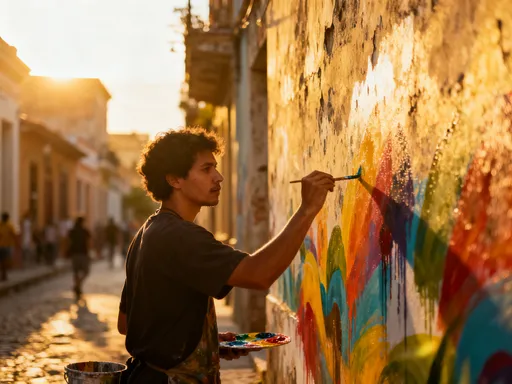
For decades, Colón has been framed by its role as a commercial engine, home to one of the largest free trade zones in the Americas. Yet beneath this economic identity lies a quieter, more colorful transformation—one that travelers are only beginning to discover. The city is undergoing a cultural renaissance, driven not by outside investment, but by local pride and creative resilience. Once-overlooked streets are now alive with murals that pulse with rhythm and meaning, their bold colors telling stories of heritage, resistance, and joy. Abandoned buildings have become canvases; forgotten plazas, stages for impromptu performances and pop-up markets.
This revival matters deeply, especially for travelers seeking authenticity in an age of curated tourism. Colón offers no polished façade—instead, it invites visitors into its raw, beating heart. The shift from industrial hub to cultural hotspot didn’t happen overnight. Grassroots collectives, supported by municipal partnerships and regional arts councils, began organizing community painting projects and artisan fairs nearly a decade ago. These efforts have steadily grown, turning alleys into open-air galleries and transforming public spaces into zones of connection and expression. Today, walking through downtown Colón feels less like passing through a transit point and more like stepping into a living museum of Caribbean-Latin fusion.
What makes this transformation significant is its organic nature. Unlike cities where tourism dictates artistic output, Colón’s art emerges from within. It reflects the layered identity of a port city shaped by migration, trade, and cultural blending. The murals depict Afro-Caribbean drummers, Indigenous weavers, and Spanish colonial architecture—not as relics, but as living traditions. Travelers who take the time to look closely will find that Colón is not trying to become something it’s not. Instead, it is rediscovering itself, one brushstroke at a time.
The Heartbeat of Local Art: Meet the Makers
At the core of Colón’s creative awakening are the artists themselves—painters, sculptors, textile artisans, and woodcarvers whose hands shape the city’s visual language. These are not distant figures behind gallery glass but neighbors who work in sunlit courtyards, roadside kiosks, and modest studios tucked between family homes. Many come from lineages of craftsmen, passing down techniques through generations, while others are self-taught innovators experimenting with new forms and materials.
One morning, near the edge of Parque Antonio Paredes, I met Rosa Méndez, a third-generation weaver known for her intricate *nasas*—traditional baskets made from natural fibers dyed with plant-based pigments. Her fingers moved swiftly, looping strands of *chunga* palm into geometric patterns that echo the designs of her Ngäbe-Buglé ancestors. She spoke proudly of how each pattern carries meaning: spirals for continuity, zigzags for mountain paths, diamonds for the four directions. “This isn’t decoration,” she said, holding up a nearly finished piece. “It’s memory.”
Just a few blocks away, in a converted warehouse, a group of young muralists from the collective *Colores del Canal* were putting finishing touches on a 30-foot wall painting celebrating Afro-Panamanian musicians. Their work blends graffiti-inspired lettering with motifs from Santería and Congolese symbolism, creating a visual language that feels both modern and deeply rooted. These artists often collaborate with schools and youth centers, offering workshops that keep traditions alive while empowering the next generation. When travelers engage with them—not just as customers but as listeners—they become part of a larger story of cultural continuity.
Supporting these creators goes beyond appreciation; it sustains livelihoods. In a city where formal employment opportunities can be limited, the sale of handmade goods provides crucial income. Buying directly from artists ensures that value stays within the community, reinforcing a model of economic dignity. Whether it’s a carved mask inspired by Carnival traditions or a hand-painted tile depicting a coastal sunrise, each purchase becomes a small act of solidarity.
Shopping with Purpose: Markets That Tell Stories
In Colón, shopping is not a transaction—it’s a conversation. The city’s marketplaces are vibrant hubs where art, identity, and daily life converge. Unlike the sterile souvenir shops found in resort towns, these spaces overflow with sensory richness: the earthy scent of raw clay, the rustle of woven fibers, the metallic chime of hand-hammered jewelry. Vendors don’t just display products; they share stories. A wooden figurine isn’t merely labeled—it comes with an explanation of the tree it was carved from, the spirit it represents, and the festival it might be used in.
The Mercado de Artesanías de Colón, located just off Avenida 4 de Julio, is a prime example. Here, stalls stretch beneath a wide canopy, each one a window into a different craft tradition. You’ll find *molas*—layered textile artworks created by Guna women—featuring intricate animal silhouettes and mythological scenes. Nearby, ceramicists sell glazed pots painted with marine motifs, while others offer drums hand-carved from ceiba wood, their surfaces etched with ancestral symbols. These items are not mass-produced replicas; they are made in small batches, often one at a time, with care and intention.
What sets these markets apart is the emphasis on authenticity. Travelers are encouraged to look closely: examine stitching, feel textures, ask questions. A genuine *mola* will have dozens of hand-stitched layers, each fabric precisely aligned. A real *nasa* basket will show slight variations—proof of human hands at work. Vendors appreciate curiosity and often welcome the chance to explain their process. This kind of engagement fosters mutual respect and deepens the value of what is purchased.
Shopping here also means making ethical choices. While bargaining is common, it should never come at the expense of fairness. A respectful approach involves listening to the stated price, understanding the labor behind the item, and negotiating with kindness. Many artisans display price lists or accept mobile payments, reflecting a blend of tradition and modern convenience. By choosing to buy thoughtfully, visitors contribute to a sustainable economy that honors craftsmanship over commodification.
From Street Corners to Galleries: The Artistic Landscape
Colón’s artistic energy flows freely across spaces, moving seamlessly from spontaneous street displays to curated gallery exhibitions. This fluidity reflects the city’s inclusive vision of art—not as something reserved for elites, but as a public good. Murals dominate alleyways and building facades, transforming neglected corners into destinations. One of the most striking stretches runs along Calle 15, where a series of interconnected panels depict the history of the Panama Canal through the eyes of local workers. Each image captures moments of labor, resistance, and celebration, rendered in vivid hues that contrast with the weathered brick behind them.
These public art projects are often community-led, funded through small grants or crowdfunding campaigns. Artists collaborate with residents to ensure the work resonates with local memory and experience. Some walls include QR codes that link to audio recordings—oral histories told by elders, poems recited in Creole Spanish, or songs played on traditional instruments. This integration of technology and tradition enhances accessibility, allowing visitors to engage more deeply with the narratives on display.
Alongside these outdoor expressions, a network of small galleries has emerged. Spaces like Galería Raíces Urbanas and Espacio Creativo Colón offer rotating exhibitions that spotlight emerging talent and experimental forms. These venues are intimate, often housed in repurposed colonial buildings with high ceilings and wooden floors. Admission is usually free or by donation, reinforcing the idea that art should be open to all. Exhibits might feature mixed-media installations using recycled materials from the port, or photographic series documenting everyday life in barrios like Chaguaní or Santa Rosa.
For travelers, navigating this landscape requires curiosity and awareness. While many areas are safe during daylight hours, it’s wise to visit with a local guide or as part of a cultural tour. Respecting boundaries—such as not entering private courtyards without permission or photographing people without consent—is essential. When done thoughtfully, exploration becomes a form of homage rather than intrusion. The goal is not to consume culture, but to witness it with humility and gratitude.
The Craft of Connection: How Art Bridges Cultures
Art has a unique power to dissolve barriers, creating moments of shared understanding that words alone cannot achieve. In Colón, these moments happen frequently—not in formal settings, but in fleeting exchanges between creator and visitor. A smile exchanged over a sketchbook, a nod of appreciation for a color palette, a shared laugh when a child reaches out to touch a sculpture—these small interactions accumulate into something profound.
I remember standing at a roadside stall watching an elderly woodcarver shape a small bird from cocobolo wood. He didn’t speak much English, and my Spanish was clumsy, but as he handed me the finished piece, he pointed to his chest and said, “Corazón.” Heart. No further explanation was needed. That tiny figure, with its smooth curves and delicate wings, carried the weight of intention, patience, and care. To own it is not just to possess an object, but to carry a piece of someone’s spirit.
These connections matter because they transform travel from observation into participation. When we take home a handcrafted item, we’re not just acquiring a souvenir—we’re preserving a moment of human connection. We become stewards of stories that might otherwise go untold. In a world where mass production dominates, these authentic exchanges remind us of the value of slowness, of presence, of making space for meaning.
Moreover, art becomes a bridge between cultures, allowing visitors to glimpse ways of seeing and being that differ from their own. A mask used in a religious ceremony may not be for sale, but learning about its significance fosters respect. A dance performed during a weekend festival may not be staged for tourists, but witnessing it invites reflection. These experiences cultivate empathy, encouraging travelers to return home with broader perspectives and deeper compassion.
Practical Magic: Navigating Colón’s Art Scene Like a Local
Experiencing Colón’s art scene fully requires more than a passing glance—it calls for intention and preparation. The best time to visit is during the dry season, from mid-December to April, when outdoor markets and street festivals are in full swing. Weekends, especially Sundays, are particularly vibrant, as artisans gather in central plazas and live music fills the air. Early mornings offer cooler temperatures and fewer crowds, ideal for unhurried browsing and meaningful conversations with makers.
Getting around is easiest with a combination of local taxis and walking. Official yellow taxis are reliable and metered, while ride-sharing apps are increasingly available. For those comfortable with public transit, the Metro Bus system connects key neighborhoods, including those near the historic downtown and waterfront promenade. Always keep valuables secure and stay aware of your surroundings, especially in less-frequented areas. Traveling with a guide who knows the local art scene can enhance safety and deepen understanding, providing context that might otherwise be missed.
Neighborhoods worth exploring include the historic center around Plaza Independencia, where colonial architecture meets contemporary murals; Chaguaní, known for its woodcarving workshops; and the riverside district of Playa de Oro, home to several community art cooperatives. Each area offers a distinct flavor of Colón’s creative spirit. When visiting studios or markets, approach with openness—ask permission before photographing people, listen more than you speak, and let curiosity lead.
Identifying authentic craftsmanship involves paying attention to detail. Look for irregularities that signal handmade work: slight asymmetries in weaving, variations in paint thickness, or natural imperfections in wood grain. Avoid items that look too perfect or uniform—these are often imported imitations. Prices should reflect the labor involved; extremely low costs may indicate exploitation or poor quality. When in doubt, ask about the maker, the materials, and the process. Most artisans are happy to share, and their answers will guide your decisions.
Why This Journey Matters: The Future of Travel and Art
The story of Colón’s artistic resurgence is about more than tourism—it’s a blueprint for how cities can honor their roots while embracing renewal. In an era where travel is often criticized for contributing to cultural erosion and environmental strain, Colón offers a counter-narrative: one where visitors don’t just take, but give back. By choosing to engage with local art, travelers support cultural preservation, economic resilience, and intergenerational continuity.
This kind of travel aligns with the growing movement toward slow, conscious exploration—where the goal is not to check destinations off a list, but to form real connections. It reflects a shift in values: from consumption to contribution, from spectacle to substance. Cities like Colón remind us that beauty thrives not only in famous landmarks but in the quiet corners where people create with purpose.
As you walk through its painted streets, pause. Let the colors speak. Let the textures ground you. Let the stories linger. When you leave, carry more than souvenirs—carry the memory of hands shaping wood, voices singing in Creole, children laughing beneath a mural of dancing suns. Let Colón be a reminder that the most meaningful journeys are not measured in miles, but in moments of shared humanity. Seek out places where art meets the marketplace. And when you find them, step in—not as a spectator, but as a witness, a learner, a participant. The world is full of such corners, waiting to be seen.