Secrets in Stone: What Bern’s Hidden Architecture Whispered to Me
You know that feeling when a city just talks to you? Bern wasn’t just postcard-perfect—it surprised me with secrets tucked in sandstone facades and crooked alleys. I didn’t expect medieval arcades to feel so alive, or fountains to tell stories. What I discovered wasn’t in the guidebooks: Bern’s architecture isn’t just beautiful, it’s deeply human. Let me take you where the real charm hides—in the details most travelers miss. This is a city that doesn’t shout its history but whispers it, in the curve of a gargoyle’s smile, the creak of an ancient floorboard, the way sunlight slants through a centuries-old window. Bern invites not just sightseeing, but listening.
First Impressions: Beyond the Picture-Perfect Postcard
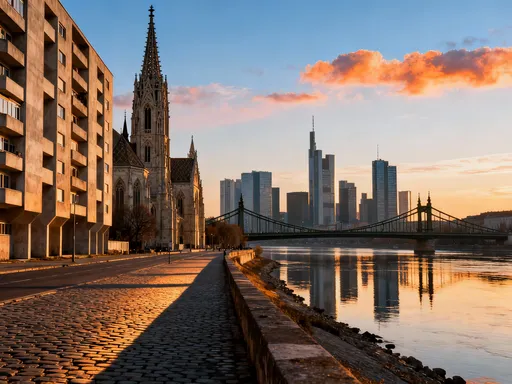
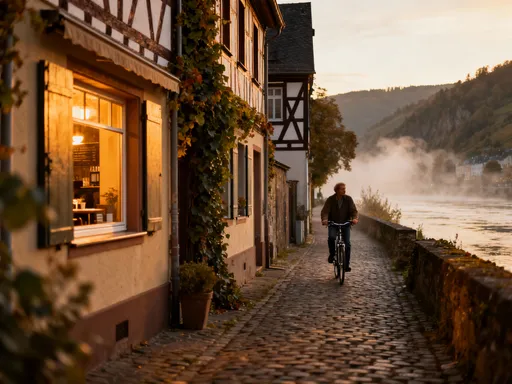
Bern greets visitors with a quiet confidence. As you approach from the surrounding hills, the city unfolds like a carefully preserved manuscript—its old town nestled in a gentle bend of the Aare River, protected on three sides by water and crowned with a skyline of sandstone rooftops and church spires. The golden glow of the local sandstone in the late afternoon light gives the entire district a warm, almost luminous quality, as if the city itself is breathing softly. It’s no wonder Bern’s historic core was designated a UNESCO World Heritage site in 1983. Yet, the official accolades and polished brochures only capture the surface. They speak of symmetry, order, and preservation, but they don’t convey the subtle imperfections—the slight lean of a column, the mismatched tiles on a roof, the ivy creeping through a crack—that make Bern feel lived-in and real.
What struck me immediately was the harmony of the urban fabric. Unlike cities that grew chaotically over centuries, Bern’s medieval planners laid out a remarkably coherent grid, centered around a single main street that gently slopes downhill. This deliberate design creates a rhythm as you walk, a sense of progression that feels both natural and intentional. But beneath this order lies a deeper narrative—one of fire, rebuilding, adaptation, and quiet resilience. The city has survived devastating fires, floods, and the shifting tides of political influence, yet each event left not destruction, but a new layer in its architectural story. The postcard image is flawless, but the truth is richer: Bern is not frozen in time. It is a city that remembers, evolves, and whispers its past to those who pause long enough to listen.
For the traveler seeking authenticity, this duality is magnetic. The polished beauty draws you in, but the hidden irregularities keep you close. It’s in these subtle contradictions—between preservation and progress, grandeur and humility—that Bern reveals its soul. The city does not perform for tourists; it simply exists, confident in its identity. And as I wandered deeper into its arcades and alleyways, I began to sense that Bern’s true charm wasn’t in its monuments, but in the quiet conversations between stone and time.
The Medieval Heartbeat: Walking Under the Lauben
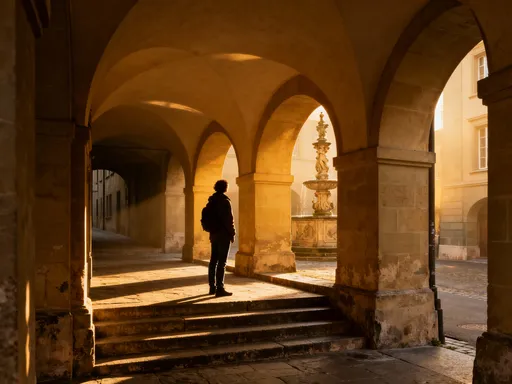
The Lauben—Bern’s iconic covered arcades—are more than a weatherproof convenience. Stretching over five kilometers through the old town, they form a continuous sheltered pathway that defines the rhythm of daily life. At first glance, they appear uniform: graceful stone arches, vaulted ceilings, and rows of shops behind wooden shutters. But walk slowly, and the details emerge. The stone underfoot is worn uneven, shaped by centuries of footsteps—merchants, craftsmen, children, and now, tourists. Some flagstones are deeply grooved, others cracked and repaired, each imperfection a silent record of passage. The light shifts as you move, filtering through narrow alley entrances or reflecting off polished shop windows, creating a dance of shadow and gold that changes with the hour.
Originally built in the 13th century after a devastating fire destroyed much of the wooden city, the arcades served multiple practical purposes. They provided shelter from rain and snow, crucial in a region with long winters. They created shaded walkways in summer, making shopping and socializing more comfortable. But more importantly, they fostered community. The covered walkways allowed people to gather, trade, and interact regardless of weather, turning the streets into living rooms. Even today, the Lauben are not museum pieces but vital social arteries. Locals stop to chat beneath the arches, children dart between columns, and café tables spill out into the covered lanes, blurring the line between public and private space.
Look up, and you’ll notice carved capitals atop the pillars—some depicting animals, others faces, some whimsical, others stern. These are not merely decorative; they were once identifiers, helping illiterate citizens recognize where a particular guild or merchant operated. A bear, for instance, might mark a butcher’s stall; a grapevine, a wine seller. These carvings were a form of visual language, a way of navigating the city before street numbers existed. Today, they remain as quiet witnesses to Bern’s mercantile past, a reminder that architecture shapes not just space, but behavior. The arcades didn’t just protect people from the elements—they structured how they moved, interacted, and belonged.
What makes the Lauben truly remarkable is their seamless integration of old and new. Beneath the same arches, a 17th-century apothecary might now house a modern bookstore, a centuries-old bakery shares space with a minimalist coffee shop. The architecture doesn’t resist change—it absorbs it. This continuity is not accidental but intentional, guided by strict preservation codes that ensure renovations respect the original proportions, materials, and character. As a result, the arcades feel alive, not staged. They are not a reconstruction of history but a continuation of it, a living network where the past isn’t displayed behind glass but walked upon every day.
Fountains as Forgotten Storytellers
Scattered throughout Bern’s old town are over a hundred public fountains, many adorned with elaborate baroque statues. To the casual observer, they may seem like ornamental relics—quaint photo opportunities dotting the squares and street corners. But these fountains were once the lifeblood of the city, the primary source of fresh water for cooking, cleaning, and drinking. Before modern plumbing, each neighborhood relied on its fountain, and the daily ritual of drawing water shaped social routines. Women gathered to fill buckets, children played nearby, news was exchanged—these were the original community hubs.
What elevates Bern’s fountains beyond utility is their storytelling power. Each statue represents a figure from mythology, history, or local legend, carefully chosen to reflect civic values. The Zähringerbrunnen, one of the oldest, features a knight in armor—the mythical founder of Bern, Duke Berchtold V of Zähringen. The Kindlifresserbrunnen (Child-Eater Fountain), with its grotesque figure devouring children, once served as a warning to misbehaving youth, though modern interpretations see it as a symbol of the chaos that order must overcome. The Anna-Seiler-Brunnen honors the 13th-century woman who founded Bern’s first hospital, celebrating compassion and civic duty. These figures are not random; they are moral anchors, silently teaching lessons about justice, sacrifice, and identity.
The craftsmanship is extraordinary. Sculptors in the 16th and 17th centuries paid meticulous attention to detail—the folds of a robe, the tension in a horse’s muscles, the sorrow in a face. Even the basins are engraved with symbols: coats of arms, floral motifs, inscriptions in Latin. These elements were not merely decorative but symbolic, reinforcing the city’s connection to its rulers, its church, and its people. Today, the fountains no longer provide drinking water, but they remain active—many are still plumbed and flow year-round, their gentle trickle a soothing soundtrack to city life.
Preservation efforts have ensured that these silent narrators endure. Restoration teams carefully clean and repair the statues, using traditional techniques to maintain authenticity. Some fountains have been moved for protection, but their original locations are marked, preserving the historical context. What’s remarkable is how these figures continue to resonate emotionally. Parents point them out to children; tourists pause to photograph their expressions; locals walk past with quiet familiarity, as if acknowledging old friends. In a world of digital noise, Bern’s fountains offer a rare form of quiet communication—a dialogue between past and present that doesn’t require words.
The Hidden Layers: Gothic Bones Beneath Baroque Skin
Bern’s architecture is a palimpsest—a manuscript written over and over, where earlier texts still show through. Many of its most elegant facades conceal centuries of transformation. What appears to be a unified Renaissance building may in fact be a patchwork of styles, each layer reflecting a different era’s tastes, technologies, and priorities. The most striking example is the Bern Minster, or Münster of Bern, whose construction spanned over four centuries. Begun in the early 15th century in the Gothic style, it features pointed arches, ribbed vaults, and an imposing west façade with one of Europe’s tallest church spires. But financial constraints, religious upheaval, and changing architectural fashions meant the interior was completed in stages, incorporating elements from later periods.
Inside, the contrast is palpable. The nave soars with classic Gothic verticality, drawing the eye upward toward heaven. Yet the side chapels and altars reflect Baroque and Renaissance influences—gilded carvings, ornate frescoes, and warmer color palettes that soften the austerity of the original design. This blending is not a flaw but a testament to continuity. The church was never abandoned; it was adapted, renewed, and reinterpreted by each generation. The same is true across the city. A building with a sleek 18th-century façade may rest on Romanesque foundations, its cellar walls dating back to the 12th century. Windows have been widened, staircases reconfigured, roofs reshaped—all in response to evolving needs.
These architectural layers are not hidden out of shame but preserved as part of Bern’s identity. Restoration projects often deliberately expose older elements—uncovering original stonework, revealing medieval paint fragments, or leaving sections of wall unfinished to show the construction history. This approach reflects a philosophy: authenticity is not about purity, but about honesty. A building doesn’t lose value because it has changed; it gains depth. The imperfections—crooked beams, mismatched stones, repurposed materials—are not flaws to be erased but records to be read.
For the observant traveler, these details transform a simple walk into a kind of archaeological journey. A doorway may have a Gothic arch but a Renaissance doorframe; a cellar may have vaulted ceilings supported by Romanesque pillars. These juxtapositions are not accidents but evidence of resilience. They show a city that has endured fires, wars, and modernization not by resisting change, but by absorbing it. Bern’s charm lies not in its perfection, but in its willingness to bear the marks of time with grace.
Color, Craft, and the Quiet Rebellion of Details
If Bern’s grand structures tell the city’s official story, its smallest details whisper the personal one. Look closely at a sandstone wall, and you’ll see patterns of erosion—some areas pitted by rain, others smoothed by centuries of touch. These are not signs of decay but of life. The same is true of ironwork: window grilles twisted into floral motifs, door knockers shaped like animals, hinges forged with care. These elements were made by artisans whose names are mostly lost, yet their work endures, a quiet testament to skill and pride. In an age of mass production, such craftsmanship feels radical—a refusal to prioritize speed over beauty, utility over identity.
Color, too, tells a story. While Bern’s sandstone gives the city its signature golden hue, closer inspection reveals subtle variations—warm ochres, cool grays, hints of rose and amber. These differences come from the stone’s origin, the angle of the sun, and the effects of weathering. Roof tiles vary as well: some deep red, others earthy brown, laid in patterns that catch the light differently throughout the day. Even paint colors on doors and shutters—often muted greens, soft blues, or warm terracottas—follow unwritten rules that maintain harmony without uniformity. These choices are not arbitrary; they reflect a collective aesthetic, a shared understanding of what belongs.
Inside the patrician houses, the details grow richer. Ceilings are painted with floral patterns, mythological scenes, or family crests. Floors are laid with intricate parquet or stone inlays. Staircases curve with elegant banisters carved by hand. These interiors were not designed for show alone but as expressions of values—order, beauty, legacy. The families who lived here saw their homes as extensions of themselves, spaces to be shaped with intention. Even today, residents maintain these traditions, repairing rather than replacing, preserving the character of their neighborhoods.
What makes these micro-details so powerful is their cumulative effect. No single door handle or tile pattern would attract attention on its own. But together, they create a sense of place so strong that you feel it in your bones. This is the opposite of generic urban design, where glass towers and chain stores erase local identity. Bern’s architecture says: we matter, we remember, we care. It’s a quiet rebellion against forgetfulness, a daily affirmation that beauty and meaning belong in the everyday.
Living Architecture: How Bern Balances Heritage and Modern Life
Preservation does not mean stagnation. Bern’s greatest achievement is not that it looks old, but that it lives fully in the present. The city has found a delicate balance between honoring its past and embracing contemporary needs. Cafés operate in vaulted cellars that once stored wine or grain. Modern boutiques display their wares behind historic façades, their signage designed to complement, not clash with, the architecture. Solar panels are discreetly installed on rooftops, their sleek black surfaces blending with traditional tiles. Elevators are added to historic buildings to improve accessibility, their entrances carefully integrated to minimize visual impact.
This balance is guided by strict urban planning policies. Bern’s heritage office reviews every renovation, ensuring that changes respect the city’s character. Materials must match the original as closely as possible; window proportions, roof angles, and color palettes are regulated to maintain harmony. But the rules are not rigid—they allow for creativity within boundaries. A new glass extension might be permitted if it contrasts respectfully with the old, making the historical layers more visible rather than hiding them. The goal is not to freeze the city in a single moment, but to guide its evolution with care.
Real-world examples abound. The conversion of the former municipal laundry building into a cultural center preserved its brick façade while inserting a modern interior for exhibitions and events. A historic school building now houses a sustainable fashion brand, its classrooms transformed into showrooms and workshops. Even the tram lines, introduced in the 20th century, were routed to minimize disruption to the old town’s fabric. These interventions show that heritage and modernity are not enemies—they can be collaborators.
For residents, this balance enhances quality of life. They live in a city that is beautiful, functional, and deeply rooted. Children grow up knowing the names of the fountains, the stories behind the statues, the rhythm of the arcades. Tourists benefit too, experiencing a destination that feels authentic, not staged. Bern proves that a city can be both timeless and timely—that respect for the past can coexist with progress, not in spite of it, but because of it.
Why These Secrets Matter: The Soul Behind the Stone
Bern’s architectural secrets matter because they remind us of what it means to belong. In an age of fast travel and fleeting experiences, the city offers a different model—one of depth, continuity, and quiet connection. Its fountains, arcades, and weathered walls do not dazzle with spectacle but invite contemplation. They ask us to slow down, to look closely, to listen. And in doing so, they reveal a truth: that the most meaningful travel is not about checking destinations off a list, but about feeling the presence of time, of people, of shared humanity.
The resilience of Bern’s architecture mirrors human values—patience, care, adaptation. Buildings are not discarded when they age; they are renewed. Stories are not forgotten; they are passed down in stone and water. Identity is not erased by change; it is strengthened by it. This is a lesson for all of us, travelers and locals alike. In our own lives, we too are layered, imperfect, evolving. We carry scars, memories, and quiet acts of beauty. Bern’s architecture reflects that truth back to us, offering not just a view of history, but a mirror.
So the next time you walk through a historic city, don’t just admire the grand façades. Look for the worn step, the hidden carving, the mismatched tile. Ask what they’ve seen, what they’ve survived, what they’re still saying. Because every city whispers if you’re willing to listen. And in Bern, the stones don’t just stand—they speak, softly, wisely, of time, of care, of home.