Wandering Through Wonder: Taupō’s Wildly Beautiful Soul
Have you ever felt nature speak directly to your soul? That’s exactly what happened when I wandered through Taupō, where volcanic plateaus meet turquoise lakes and misty forests. This isn’t just a destination—it’s a living landscape that shifts with the light, surprises at every turn, and invites slow, curious exploration. From steaming cliffs to silent lake shores, Taupō doesn’t shout for attention. It whispers. And if you listen, you’ll find moments so pure, they linger long after you leave. For travelers seeking depth over dazzle, stillness over speed, this corner of New Zealand offers a rare kind of beauty—one that reveals itself only to those willing to pause, breathe, and simply be.
The First Glimpse: Arriving in Taupō with No Expectations
Approaching Taupō along State Highway 1, there’s no grand announcement. No dramatic fanfare or towering signs declaring arrival. Instead, the landscape unfolds gradually—a softening of the horizon, a shift in the air, and then, suddenly, the vast expanse of Lake Taupō glimmers into view. For many visitors, this quiet reveal is the first lesson Taupō teaches: beauty does not always announce itself. It waits. It watches. And when you’re ready, it reveals itself in layers. The town sits lightly on the land, its modest buildings nestled among pine trees and rolling hills, never overpowering the natural backdrop. This harmonious blend of settlement and wilderness sets the tone for what’s to come—a journey not of conquest, but of quiet connection.
Driving into the region, the change in atmosphere is immediate. The air grows crisper, carrying the faint scent of damp earth and pine resin. On a clear morning, sunlight filters through mist rising off the lake, casting a silver sheen across the water. Birdsong—clear and unhurried—drifts through open windows, replacing the hum of city life. There’s a stillness here, not of emptiness, but of presence. It’s the kind of silence that invites reflection, the kind that makes you lower your voice without thinking. For travelers accustomed to tightly packed itineraries, this initial experience can feel disorienting. But that’s precisely the point. Arriving in Taupō without rigid plans allows space for spontaneity, for the unexpected detour, the unplanned pause by the water’s edge. It opens the door to a different kind of travel—one guided not by schedules, but by sensation.
What makes this first impression so powerful is its authenticity. Unlike destinations that perform for tourists, Taupō does not dress up. It doesn’t need to. The lake remains the centerpiece, unchanged by development, its shoreline dotted with native flaxes and weathered wooden benches. The town’s rhythm is shaped by the lake and the seasons, not by tourist demand. This lack of artifice creates a rare sense of trust between visitor and place. You feel welcomed, not marketed to. And in that subtle difference lies the foundation of a meaningful journey—one that begins not with a checklist, but with a breath.
Lake Taupō: More Than Just a Body of Water
Lake Taupō is not merely a scenic backdrop—it is the lifeblood of the region, a vast freshwater basin formed over 25,000 years ago by one of the most powerful volcanic eruptions in Earth’s history. Covering 616 square kilometers, it is the largest lake in New Zealand, yet its true significance lies not in size alone, but in its presence. The water, fed by mountain streams and underground springs, is so clear that on calm days, you can see pebbles resting meters below the surface. Its color shifts with the weather—from deep sapphire under sunlight to soft gray when clouds gather—reminding visitors that nature is never static. This constant transformation makes the lake a living companion throughout any stay in Taupō, one that reflects not just the sky, but the mood of the moment.
For those seeking connection over activity, the simplest way to engage with the lake is also the most rewarding: sitting quietly by its shore. Places like Acacia Bay and Five Mile Bay offer gentle access points where benches face the water, inviting stillness. There are no grand spectacles here—no roaring waves or dramatic cliffs—just the soft lap of water against stone, the occasional call of a pied shag, and the slow drift of clouds overhead. These quiet moments become acts of mindfulness, grounding the mind in the present. Children skip stones, couples share coffee from thermoses, and solo travelers simply watch, absorbing the calm. In a world that prizes constant motion, such stillness feels revolutionary. It asks nothing of you but presence, and in return, offers clarity.
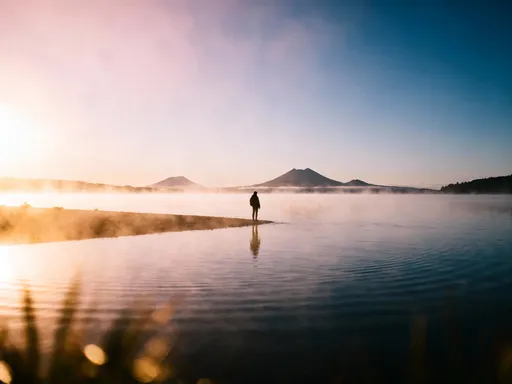
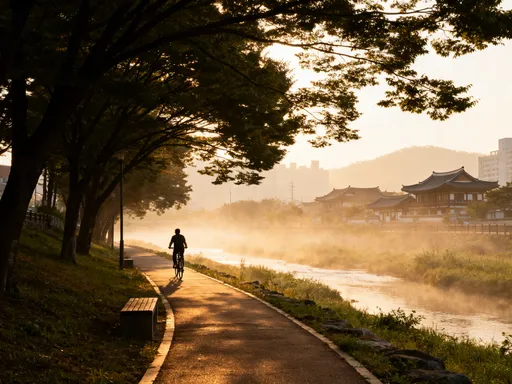
The lake also supports gentle, low-impact activities that enhance rather than disrupt its serenity. Walking along the Taupō Waterfront Path, a well-maintained trail that stretches for kilometers, allows for uninterrupted views and frequent pauses. Early mornings are especially magical, when mist hovers just above the surface and the first light paints streaks of gold across the water. Kayaking at dawn or sunset provides an even more intimate perspective, letting you glide over reflections of the surrounding hills. Fishing—particularly for trout—is another traditional pastime, rooted in both recreation and respect for the ecosystem. These experiences share a common thread: they are slow, deliberate, and deeply attuned to the environment. They do not seek to dominate the landscape but to move within it, like a guest in a sacred space.
The Tongariro River Walk: Where Water Carves Peace
Just a short distance from the lake, the Tongariro River flows with quiet power, carving a path through basalt rock and native vegetation. The Tongariro River Walk, particularly the section near the Taupō Bungy Bridge, offers one of the most meditative hiking experiences in the region. Unlike mountain treks that demand endurance, this trail invites a different kind of effort—one of attention. The path follows the river’s edge, winding through clusters of flax and cabbage trees, their broad leaves catching the breeze. The sound of rushing water is constant, a natural rhythm that synchronizes with your footsteps. Here, walking becomes a form of moving meditation, each step a release of tension, each breath a return to the moment.
The contrast between the river’s energy and the trail’s tranquility is striking. The current moves swiftly, tumbling over rocks and swirling into deep pools, yet the path remains serene, shaded and sheltered. This duality mirrors the experience of travel itself—the external motion of journeying paired with an internal stillness that grows with each mile. The trail is well-maintained and mostly flat, making it accessible to travelers of all ages and fitness levels. Wooden bridges and stepping stones cross minor tributaries, adding a gentle sense of playfulness. Along the way, signs identify native plants and explain the river’s ecological importance, enriching the experience without overwhelming it. There are no crowds, no loud voices—just the occasional passerby who nods in quiet acknowledgment, as if sharing a secret.
One of the most powerful aspects of this walk is its invitation to slow down. There are no panoramic viewpoints demanding photographs, no summit markers to reach. Instead, the beauty is in the details—the way sunlight dapples the water, the flash of a kingfisher diving, the smoothness of river-worn stones. Travelers accustomed to ticking off attractions may find this disarming at first. But those who surrender to the pace discover something deeper: a sense of belonging. The river does not care if you are a tourist or a local. It flows the same for all. In that indifference lies a strange comfort—a reminder that we are part of something larger, moving in rhythm with ancient forces.
Hidden Valleys and Steamy Trails: Discovering Waimangu Volcanic Valley
If Lake Taupō represents stillness, Waimangu Volcanic Valley embodies transformation. Located just south of the town, this geothermal wonderland was born from the catastrophic 1886 eruption of Mount Tarawera, which reshaped the landscape and created a new system of hot springs, fumaroles, and mineral-rich lakes. Today, Waimangu is one of the youngest geothermal systems in the world, still evolving with visible energy. Walking through it feels like stepping into another era—steam rises from cracks in the earth, pools glow in shades of emerald and rust, and the air carries the faint scent of sulfur. Yet, despite its otherworldly appearance, the valley is not alien. It is deeply alive, a testament to nature’s ability to regenerate after destruction.
The self-guided walking trail at Waimangu stretches approximately 20 kilometers, though most visitors choose the shorter, well-marked loop that takes about two to three hours. The path winds through a landscape shaped by heat and water, passing landmarks like Frying Pan Lake—the largest hot spring in the world—and the steaming Echo Crater. What makes this experience unique is its quiet intimacy. Unlike more commercialized geothermal sites, Waimangu limits visitor numbers and avoids large structures, allowing the natural features to speak for themselves. Interpretive signs provide scientific context—explaining how microbial life thrives in extreme temperatures, or how silica deposits form delicate terraces—but the real impact comes from sensory immersion. The ground vibrates faintly underfoot, steam curls from fissures, and the colors of the mineral pools shift with the light.
Beyond the geothermal activity, Waimangu is also a story of ecological recovery. After the eruption, the land was barren. Today, native ferns, mosses, and shrubs have returned, growing in the warm soil created by geothermal heat. This regrowth is not accidental; conservation efforts have supported the return of endemic species, creating a fragile but thriving ecosystem. The valley thus becomes a living metaphor for resilience—both of nature and, by extension, of people. For travelers, walking here is not just sightseeing; it is witnessing change in motion, a reminder that even after upheaval, life finds a way. The experience lingers not in photographs, but in the memory of heat on your face, the sound of bubbling mud, and the quiet awe of standing where the Earth breathes.
Mount Titiraupenga: A Quiet Alternative to the Crowded Peaks
While the Tongariro Alpine Crossing draws thousands each year, Mount Titiraupenga offers a different kind of mountain experience—one defined by solitude and subtlety. Located just west of Taupō, this lesser-known peak rises to 1,272 meters and provides a rewarding hike without the crowds or technical challenges of more famous trails. The ascent begins in native forest, where rātā and beech trees form a canopy overhead, their roots weaving through volcanic soil. As you climb, the vegetation changes, giving way to alpine herbs and hardy grasses. The trail is well-defined but unpolished, with natural steps and occasional muddy patches—a reminder that this path is shaped more by use than by design.
What makes Titiraupenga special is its quiet dignity. There are no dramatic signposts, no bustling huts, no queues at the summit. Instead, the journey unfolds at its own pace, inviting introspection. The climb takes approximately three to four hours round-trip, depending on fitness, and is best undertaken in stable weather. Unlike the volcanic drama of Tongariro, Titiraupenga’s geology is more subdued, shaped by gradual uplift rather than explosive force. But its summit offers a panoramic view that rivals any in the region—Lake Taupō stretching to the east, the Kaimanawa Ranges to the south, and on clear days, the snow-capped peaks of Ruapehu and Ngauruhoe in the distance. From this vantage point, the landscape feels both vast and intimate, a patchwork of forest, water, and sky.
More than just a physical challenge, the hike serves as a metaphor for off-the-beaten-path travel. It does not promise viral photos or instant gratification. Instead, it rewards patience, presence, and a willingness to embrace the unscripted. There are no cafes at the top, no souvenir stands—just a simple trig station and the wind. Yet, for those who make the effort, the sense of accomplishment is deeply personal. This kind of journey reminds us that not all value is measured in popularity. Some of the most meaningful experiences are the ones no one else is rushing to have. For travelers seeking connection over conquest, Titiraupenga offers a quiet revelation: that the best destinations are not always the loudest.
Local Rhythms: Cafés, Markets, and Conversations
Beyond the natural wonders, Taupō’s charm is also shaped by its people. The town’s daily life unfolds at a gentle pace—farmers’ markets on weekend mornings, the aroma of freshly ground coffee drifting from lakeside cafés, and the unhurried exchanges between neighbors at the grocery store. These moments, small and unremarkable on the surface, form the quiet heartbeat of the place. For visitors, engaging with this rhythm can be as enriching as any hike or scenic drive. Sitting at a café with a view of the lake, sipping a flat white while watching rowers glide across the water, becomes a form of cultural immersion. There’s no performance here, no attempt to impress. Just life, lived simply and authentically.
The Saturday market, held at the Taupō Events Centre, is a perfect example of this local spirit. Stalls overflow with seasonal produce—plump tomatoes, golden honey, and freshly baked sourdough—while artisans display handcrafted jewelry, woolen scarves, and carved wooden bowls. Conversations flow easily, often beginning with a comment about the weather or a recommendation for the best apple pie. Locals don’t treat visitors as outsiders, but as temporary neighbors, welcoming them into the fold with quiet warmth. These interactions, brief as they may be, add depth to the journey. They remind us that travel is not just about seeing new places, but about connecting with the people who call them home.
Even something as simple as a walk through the town center reveals this authenticity. Buildings are functional rather than flashy, shops are family-run, and public spaces are designed for use, not show. Children ride bikes along the waterfront, dogs trot beside their owners, and retirees read newspapers on benches. There’s a sense of stability here, a community that values continuity over change. For travelers from fast-paced cities, this can be both refreshing and grounding. It offers a vision of life that prioritizes well-being over wealth, connection over convenience. In a world increasingly defined by speed and spectacle, Taupō’s quiet rhythm feels like a necessary counterbalance—a reminder that the best moments are often the ones we don’t plan.
Why Slowing Down Reveals More: The Art of Wandering Without Purpose
In an age of curated travel itineraries and social media checklists, Taupō stands as a quiet rebellion. It does not lend itself to rushed visits or photo-centric tourism. Instead, it rewards those who wander without agenda, who are willing to sit on a bench for twenty minutes just watching the light change on the water. This kind of travel—aimless, unhurried, and deeply present—is not passive. It is an active choice to resist the pressure of productivity, to reclaim time as something to be lived, not measured. And in that choice lies a deeper kind of discovery. The moments that stay with you are not the ones you planned, but the ones that found you—a heron taking flight at dusk, a sudden rainbow over the lake, the warmth of a stranger’s smile at the market.
Mindful travel, as practiced in Taupō, is not about seeing more, but about seeing differently. It’s about noticing the way fog rolls in like a slow breath, how the lake sounds different at night, or how the forest smells after rain. It’s about allowing yourself to get slightly lost, to take a wrong turn that leads to a hidden cove or a quiet trail. These detours are not failures of planning—they are the essence of exploration. They teach flexibility, curiosity, and trust in the journey itself. For many visitors, especially those accustomed to tightly scheduled vacations, this shift in mindset can be transformative. It redefines success not as the number of attractions visited, but as the depth of experience gained.
Ultimately, Taupō offers more than scenery. It offers a philosophy—one that values stillness over speed, presence over performance, and connection over consumption. In a world that never stops moving, this quiet corner of New Zealand invites us to pause, to listen, and to remember that the most profound journeys are often the ones that leave no trace but a changed heart. To wander here is not to escape life, but to return to it—with clearer eyes, a calmer mind, and a deeper sense of belonging. And perhaps, that is the truest kind of wonder.