Bratislava’s Architectural Soul: Where East Meets West in Stone and Steel
Nestled along the Danube, Bratislava reveals a skyline shaped by centuries of change. From Gothic spires to communist-era blocks, its buildings tell stories of empires, revolutions, and rebirth. I never expected such architectural drama in a city this compact. Every alleyway whispers history, while bold modern designs shout innovation. This is not just a capital—it’s a living museum of contrasts. In just a few square kilometers, Bratislava compresses layers of Central European identity, offering visitors a rare chance to walk through time. Its architecture doesn’t merely stand; it speaks, argues, and remembers.
A City Built on Layers
Bratislava’s urban landscape reflects its complex past—Celtic roots, Roman ruins, and medieval foundations set the stage for a city repeatedly reshaped by power, war, and ideology. Unlike capitals that were meticulously planned or rebuilt after destruction, Bratislava evolved organically, absorbing each historical wave like sediment. The city has been remade again and again, with every era leaving visible traces in stone, brick, and steel. Habsburg elegance sits uneasily beside socialist pragmatism, creating a patchwork identity that feels both chaotic and deeply authentic. Walking through the Old Town, you’re stepping on history that’s been paved over, buried, and resurrected—sometimes more than once.
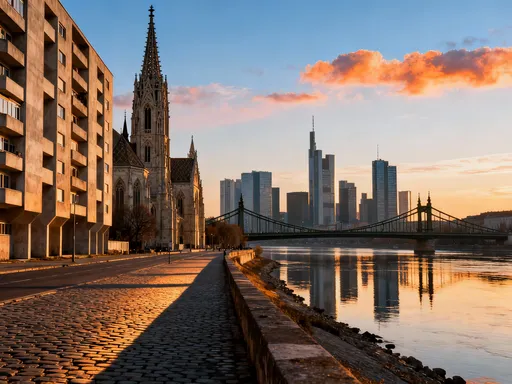
What makes Bratislava unique among European capitals is that its architecture isn’t curated; it’s accumulated. There is no single dominant style, no enforced aesthetic unity. Instead, the city embraces contradiction. A Baroque church may stand next to a 1970s administrative block, and a modern glass office building might rise behind a centuries-old townhouse. This lack of visual harmony is precisely what gives the city its character. It doesn’t pretend to be something it’s not. It acknowledges its scars, celebrates its resilience, and invites visitors to read its story through its streets.
Archaeological excavations in the city center have uncovered remnants from as early as the 1st century AD, when Roman soldiers established a military outpost known as Gerulata. These ancient foundations now lie beneath modern plazas and cafes, invisible but foundational. Later, during the Great Moravian period in the 9th century, Bratislava—then called Pressburg—became a regional stronghold. The first fortifications on Castle Hill date from this era, forming the earliest known defensive structure in the city. Each of these layers has contributed to the city’s physical and cultural depth, making Bratislava not just a place to visit, but a place to interpret.
The Heart of Old Town: Cobblestones and Courtyards
The historic center pulses with Baroque charm and Catholic grandeur, its narrow lanes paved with cobblestones worn smooth by centuries of footsteps. St. Martin’s Cathedral, rising with quiet dignity near the western edge of the Old Town, stands as a symbol of imperial legacy. Between 1563 and 1830, it served as the coronation church for the Kingdom of Hungary, hosting 19 royal ceremonies, including that of Maria Theresa in 1741. Its Gothic spire, capped with a gilded replica of the Holy Crown of Hungary, remains one of the city’s most iconic silhouettes. Though the original crown is kept in Budapest, the cathedral’s role in Central European monarchy endures in its walls and vaults.
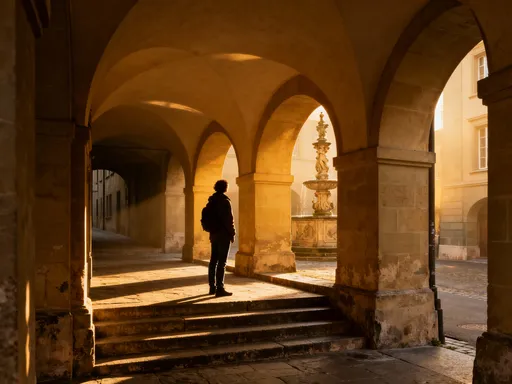
Surrounding the cathedral, colorful burgher houses line the streets in hues of ochre, rose, and sage green. These 18th- and 19th-century residences were once homes to merchants, artisans, and minor nobility. Their facades, restored with care over the past few decades, reflect the city’s commitment to preserving historical authenticity without turning the district into a theme park. Behind unassuming doors, hidden courtyards offer quiet retreats from the tourist bustle. These inner spaces were once hubs of guild life—places where apprentices trained, goods were stored, and neighbors gathered. Today, many host intimate cafes, art galleries, or boutique hotels, seamlessly blending past function with modern use.
One such courtyard, found behind the former Bishop’s Palace, now houses a small museum dedicated to ecclesiastical art. Another, near the Old Town Hall, shelters a centuries-old well and a stone relief of St. Catherine. These spaces remind visitors that Bratislava’s charm isn’t only in its monuments, but in its intimate, human-scale details. Preservation here is not about freezing time, but about allowing history to breathe within contemporary life. The city has resisted the temptation to over-commercialize its core, maintaining a balance between accessibility and reverence.
Castles and Crowns: Bratislava Castle Revisited
Perched high above the Danube on a solitary hill, Bratislava Castle dominates the skyline with its symmetrical white facade and distinctive crown-shaped tower. Though the current structure was largely rebuilt in the 1960s after a devastating fire in 1811 left it in ruins, its presence remains emotionally resonant. The site itself has been fortified since the 9th century, serving as a strategic lookout and royal residence through medieval times. Under the Habsburgs, it became a summer retreat for Empress Maria Theresa, who expanded the palace and hosted lavish court events within its halls.
The reconstruction, led by Slovak architect Milan Sládecký, aimed not to replicate the original in exact detail, but to restore its symbolic role as the city’s guardian. Some architectural purists criticized the effort as too modern or simplified, arguing that the rebuilt castle lacked the authenticity of its predecessor. Yet for most residents and visitors, the castle’s value lies not in its historical precision, but in its continuity. It remains a visual anchor, a place where the past is honored even when it cannot be perfectly preserved.
Today, the castle houses the Slovak National Museum, with permanent exhibits tracing the nation’s history from prehistoric settlements to the Velvet Divorce of 1993. Interactive displays, period artifacts, and multimedia installations make the experience accessible to families and history enthusiasts alike. The surrounding park, with its manicured lawns and shaded walking paths, offers panoramic views of the city, the Danube, and even glimpses of Austria and Hungary on clear days. At sunset, the castle glows amber, reflecting in the river below—a moment of quiet beauty that draws photographers and couples alike.
Communist Geometry: Paneláky and Urban Planning
Beyond the tourist core, rows of prefabricated paneláks define the city’s outskirts, their repetitive facades stretching across the rolling hills. These concrete apartment blocks, built rapidly during the Czechoslovak socialist period between the 1960s and 1980s, were designed to solve a housing crisis. They represent a philosophy of functional urbanism: efficient, uniform, and scalable. Each panelák could house hundreds, even thousands, of residents, with shared amenities like kindergartens, laundries, and grocery stores clustered nearby. For generations, these neighborhoods became the backdrop of everyday life—where children played in courtyards, families gathered for Sunday meals, and communities formed in the spaces between buildings.
While often criticized for their aesthetic monotony and social isolation, the paneláks are an essential chapter in Bratislava’s story. They are not merely relics of ideology, but lived spaces with emotional resonance. Today, many are undergoing renovation—facades are being insulated and painted in soft pastels, playgrounds updated, and energy systems modernized. These improvements reflect a growing recognition that urban renewal must include, not erase, the socialist-era fabric.
Areas like Petržalka, once a symbol of mass housing on the Austrian border, now showcase this transformation. Once home to over 100,000 residents in dense, high-rise blocks, Petržalka is gradually integrating green spaces, bike lanes, and mixed-use developments. A new tram line connects it more efficiently to the city center, reducing its historical sense of isolation. These changes do not deny the past; they reinterpret it. Understanding Bratislava means acknowledging the paneláks not as eyesores, but as testaments to resilience, adaptation, and the enduring need for dignified housing.
Modern Twists: Contemporary Architecture Rising
New landmarks like the SNP Bridge and the UFO Tower signal Bratislava’s bold reinvention. The bridge, completed in 1972, spans the Danube with a single, sweeping pylon supporting its deck—a striking example of 20th-century engineering. Officially named the Most SNP (Slovenského národného povstania), it commemorates the 1944 anti-fascist uprising. But beyond its historical significance, the bridge is a feat of design, linking the Old Town with Petržalka in both function and form. Its upper level carries vehicles, while the lower hosts a pedestrian walkway with unobstructed views of the castle and river.
Rising from the bridge’s southern end is the UFO Tower, an observation deck and restaurant shaped like a flying saucer. Suspended 84 meters above the water, it offers one of Europe’s most unexpected dining experiences. The panoramic windows wrap around the space, creating a sensation of floating above the city. While some critics dismiss the structure as kitsch or out of place, others see it as a necessary counterpoint to tradition—a declaration that Bratislava is not trapped in nostalgia. The restaurant, though not Michelin-starred, serves modern Slovak cuisine with seasonal ingredients, emphasizing local sourcing and culinary heritage.
These structures prove that Bratislava isn’t stuck in the past. They represent a city building forward, embracing innovation while acknowledging its roots. The contrast between the Gothic spires of the Old Town and the steel curves of the UFO Tower is not a clash, but a conversation. It’s a dialogue between memory and momentum, between preservation and progress. For visitors, this duality offers a richer experience—one that doesn’t just look back, but looks ahead.
Hidden Gems: Lesser-Known Architectural Treasures
Venture beyond the center, and Bratislava reveals quieter, more intimate architectural treasures. In the Kamzík area, nestled along forested slopes, Art Nouveau villas with floral ironwork and stained glass windows stand as testaments to early 20th-century elegance. These homes, built for wealthy industrialists and professionals, feature asymmetrical facades, turrets, and handcrafted details that contrast sharply with the uniformity of later decades. Though less visited, they are meticulously maintained, often passed down through generations.
Another under-the-radar site is the Stará Tržnica, a functionalist market hall constructed in the 1930s. With its clean lines, steel frame, and large glass panels, it exemplifies interwar modernism. Today, it hosts a weekend farmers’ market, where locals buy fresh produce, honey, and handmade cheeses. The space has been adaptively reused without losing its architectural integrity—a model of sustainable preservation. Even the lighting and signage have been designed to complement, not compete with, the original structure.
The Jewish Museum, housed in the former Neolog Synagogue on Šancová Street, blends solemnity with architectural grace. Built in 1926 in a blend of Art Deco and Byzantine styles, the synagogue survived the Holocaust but fell into disrepair during the communist era. Restored in the 2000s, it now serves as a cultural center and exhibition space, documenting Jewish life in Slovakia. The building’s geometric mosaics, arched windows, and quiet courtyard create a contemplative atmosphere, inviting reflection on loss, memory, and continuity.
Even small-scale designs reveal thoughtfulness: bus stops with curved roofs, public fountains with sculptural elements, and streetlights inspired by traditional craftsmanship. These details, often overlooked, contribute to the city’s overall sense of care and identity. They remind us that architecture is not only about monuments, but about the spaces where daily life unfolds.
Designing the Future: Sustainability and Heritage in Balance
As Bratislava grows, urban planners face the challenge of development without erasure. The city’s population has increased steadily since the 1990s, and demand for housing, transportation, and public services continues to rise. Yet expansion must not come at the cost of heritage. The delicate balance between progress and preservation defines the city’s current architectural agenda. Green roofs, solar panels on historic buildings, and the adaptive reuse of old factories show that sustainability and tradition can coexist.
One of the most ambitious projects is the transformation of the Port Area, a former industrial zone along the Danube. Once dominated by warehouses and cargo facilities, it is being reimagined as a mixed-use district with apartments, offices, cultural venues, and public parks. The design emphasizes pedestrian access, riverfront connectivity, and flood resilience. Old cranes and storage silos are being preserved as industrial monuments, integrated into the new landscape as sculptural elements. This approach honors the site’s history while opening it to new possibilities.
Another initiative focuses on retrofitting older buildings for energy efficiency. Many 19th-century townhouses now feature insulated windows, geothermal heating, and rainwater harvesting systems, all installed with minimal visual impact. These upgrades reduce carbon emissions without altering the streetscape’s character. Similarly, new constructions are required to meet strict environmental standards, with incentives for developers who incorporate green spaces and public amenities.
The goal is not to freeze Bratislava in time, but to allow it to evolve with intention. The city’s future architecture must honor memory while embracing change—a delicate but necessary dance. It’s a conversation between generations, between planners and citizens, between what was and what could be.
More Than a Crossroads—A Conversation in Stone
Bratislava doesn’t just display architecture—it lives it. Every building, whether ancient or new, contributes to a dialogue across time. The city is more than a crossroads of empires; it is a conversation in stone, steel, and mortar. For travelers, this means more than sightseeing; it’s about understanding how cities evolve through resilience and reinvention. To walk its streets is to witness how identity is built, brick by brick, layer by layer.
What makes Bratislava truly special is its honesty. It doesn’t hide its scars or exaggerate its glories. It presents itself as it is: a work in progress, shaped by triumph and trauma, beauty and banality. In its architecture, we see not just styles, but stories—of kings and workers, of faith and ideology, of loss and renewal. This is a city that invites not just admiration, but reflection.
For the 30- to 55-year-old traveler—often balancing family, work, and personal curiosity—Bratislava offers a rare depth without overwhelming scale. It’s walkable, safe, and rich in both culture and comfort. It doesn’t demand the stamina of larger capitals, yet rewards exploration with quiet revelations. Whether standing beneath the castle at dusk, sipping coffee in a hidden courtyard, or gazing at the river from the UFO Tower, one feels a sense of connection—not just to a place, but to the passage of time itself.
Bratislava’s architectural soul lies in its ability to hold opposites together: East and West, old and new, memory and momentum. It reminds us that cities, like people, are shaped by their past but not bound by it. They can heal, adapt, and grow. And in that growth, they offer hope—not just for preservation, but for the future of urban life itself.